Nocturnal life of Australian possums
Whether they are brush-tailed or ring-tailed, Australian possums are busy at work when we are sound asleep.
At night they forage for food (such as leaves, flowers and fruits), collect bedding materials to maintain their hollows or dreys, and mark their territories through scent and droppings. From April to November, possums are also searching for a mate or caring for dependent joeys during their breeding season. All the while, they endeavour to evade natural predators such owls and snakes, as well as introduced predators like stray cats and foxes.
Have you encountered a possum recently?
Of the two most common possum species in eastern Australia, the Common Brushtail Possum is more likely to make its presence known at night while you are trying to sleep, pitter-pattering on your roof or balcony accompanied by an occasionally loud, raucous growl or hiss.
The Common Ringtail Possum on the other hand is significantly quieter and much less likely to be noticed. They typically weigh 3 or 4 times less than brushtail possums making them much quieter on foot. When communicating they emit soft, bird-like chirrups, twitters, and very faint squeaks.
During the day possums are even harder to spot as they spend their time resting in a secure dwelling – with Common Ringtail Possums most likely to be sheltering in dreys they construct from sticks and leaves, natural tree hollows or cavities, or sometimes even using the right-sized nook in a built structure.
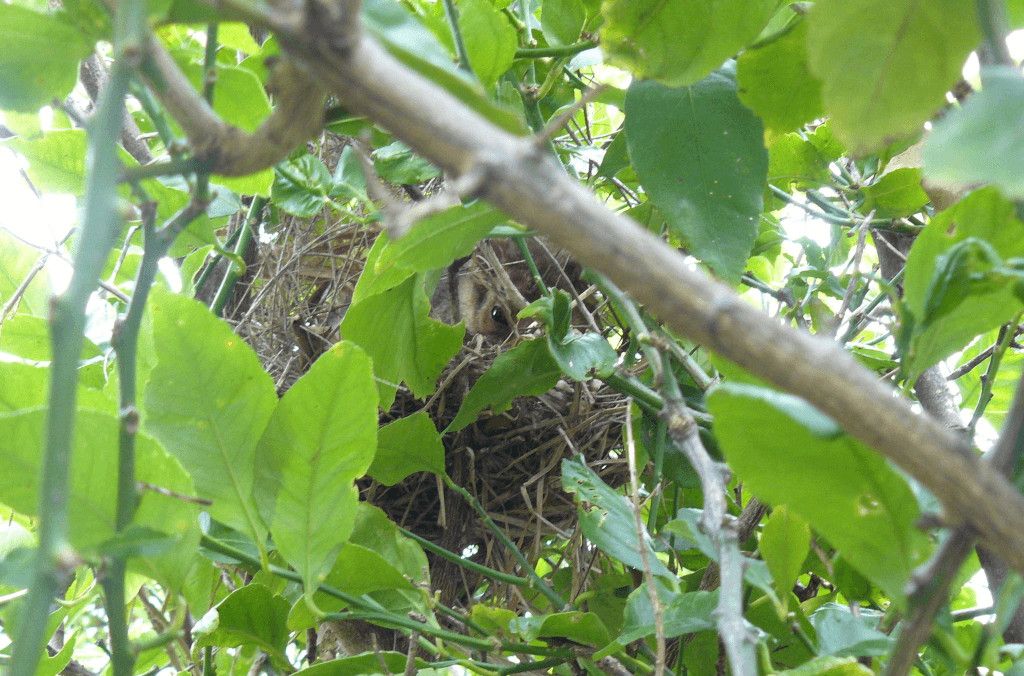
Spot the concealed Common Ringtail Possum resting during the day in a drey built out of twigs, dry leaves and grass (left), or an available tree cavity (right). 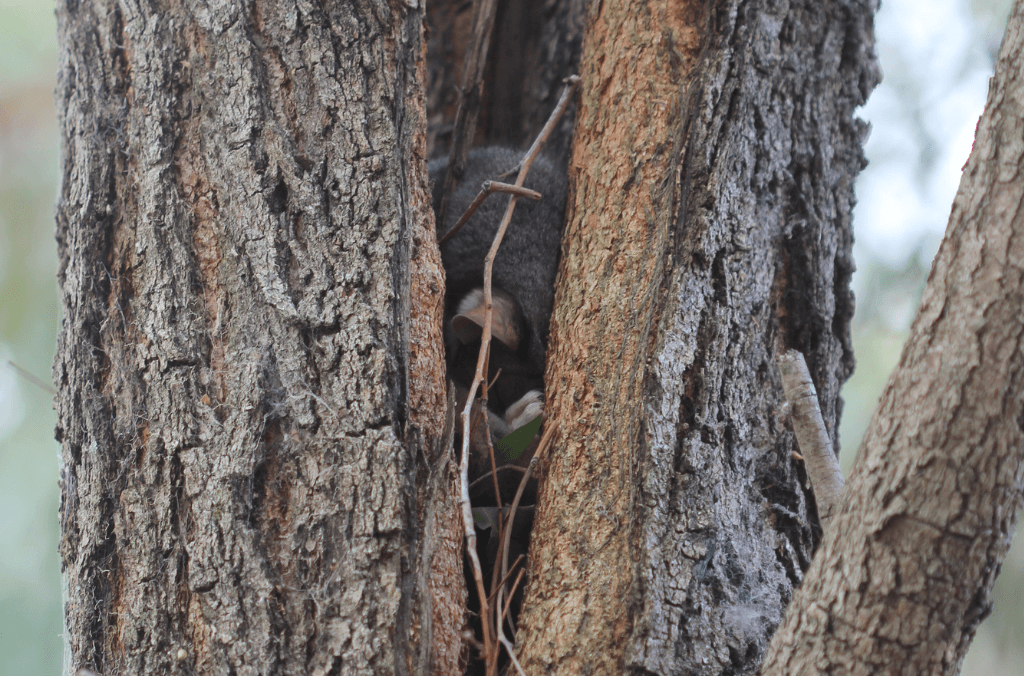
Caught on camera!
Birdlife Australia’s EagleCAM has caught yet another a sneak peek into the busy night of a Common Ringtail Possum in Newington Nature Reserve, broadcasting what it might have thought to be a solo activity to a global audience!
Click here to see a video of this daring possum in early April entering the nest of the resident pair of White-bellied Sea-Eagles to source sticks and leaves to likely use to refurbish its own dreys or tree cavity. The nest sits 22m above ground in a Grey Ironbark tree in Newington Nature Reserve.
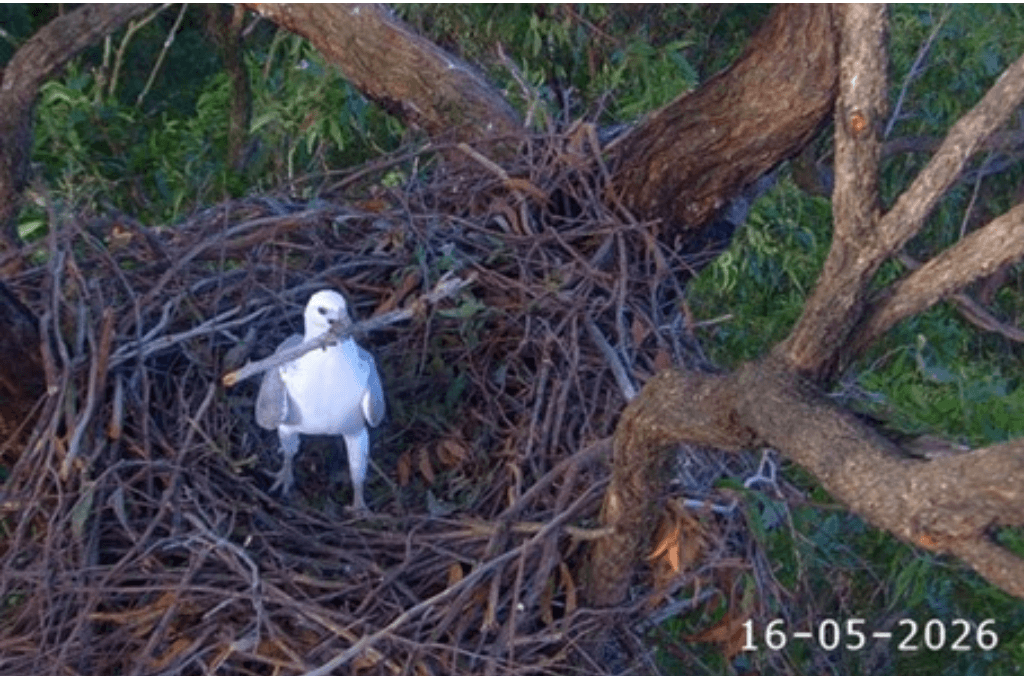
Click here to see yet another video of perhaps the same particularly bold possum in late May sourcing more sticks and leaves.
The videos show the possum’s use of its long, prehensile tail as a lever to loosen sticks from the nest and then like a rope to roll around and carry the bundle of sticks away. It also appears at points to be tucking leaves away in its little pouch.
The adventures of this Common Ringtail Possum (or possums) could turn perilous if timed incorrectly. To succeed, it must avoid the pair of White-bellied Sea-Eagles and their massive talons, as well as another recent visitor to the eagles’ nest, the Powerful Owl, known for predating on possums!
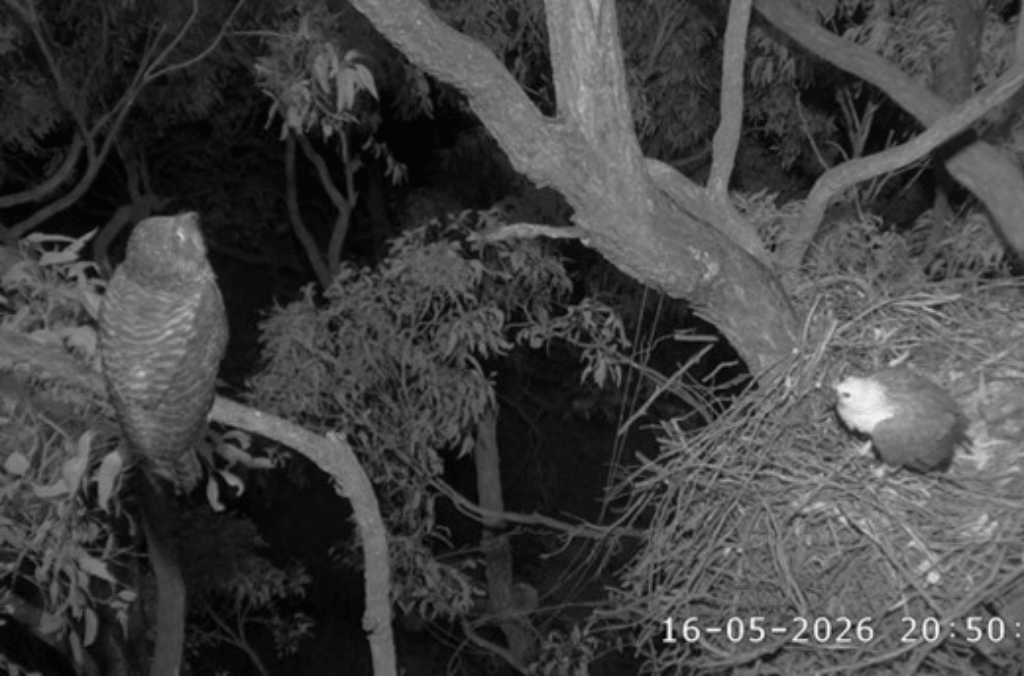
For a common yet often unnoticed native species, the Common Ringtail Possum lives a remarkably busy and adventurous life after dark.
You might also be interested in...


A new island delivers an early success story for waterbirds at Sydney Olympic Park.
In Sydney Olympic Park you'll find an incredible cast of other insects helping native plants thrive.